1 May
Yom HaShoah — Esther Avruch’s Ordeal
A Parable of Two Ships
Rabbinic wisdom speaks of a well known parable about two ships were sailing near the shore; one headed toward the open sea, while the other headed toward the harbor. Everyone was cheering the outgoing ship. But very few cheered for the incoming vessel. A sage observed, there is something paradoxical about all this. The outgoing ship should not be cheered, for nobody knows what lies ahead in wait for it. Nobody knows what stormy seas it may encounter; what dangers might lie ahead of the person as she continues her voyage. But everyone ought to be cheering the incoming ship, for it has clearly reached the port safely. The ship concluded its journey in peace. Loved ones were now united; life begins anew once more. . . .
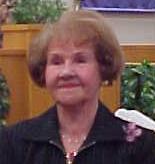
We are here to pay tribute to a most remarkable woman, Esther Avruch, whose voyage through life was full of danger, loss, joy and triumph. survived the horrors of the Holocaust and made a wonderful life.
Esther’s Life
Let me tell you a little bit about Esther’s life. She was born July 15, 1929, in Sochaczew, Poland, the daughter of Avrum-Scholum and Miriam Fleischman. She was the third youngest of ten children, Esther, and one of her sisters were the only family members to survive the Warsaw Ghetto and the Holocaust.
Like many children in Eastern Europe, religious families sent their children to Catholic schools to learn secular studies, while spending the rest of the day learning about Judaism. (My father also attended Catholic school with all of his siblings–despite the fact that they were Hasidic Jews; this was quite common in Eastern Europe because there were no public schools.) Esther learned at the one of the first Beth Ya’akob schools for Jewish girls. Esther could still remember the songs she learned in school. She dressed up like a Jewish princess whenever she attended services, which she always loved doing. Esther also learned to speak several languages that included, Yiddish, Polish, and Hebrew.
Every week, she used to clean her home for the Sabbath; she had a very happy childhood. Esther especially loved dressing up for the Sabbath in her finest clothes.
The Beginning of the War Years
As Hitler approached Poland, anti-Semites used to say, “Just wait till Hitler comes to Poland . . .” The situation grew worst in Sochaczew, and the family decided to leave for Warsaw, where they thought life would be safer.
In one of the buildings they were hiding, a German bomb exploded the building but miraculously nothing happened. This happened on September 3rd of 1939.
One of the worst experiences occurred on Yom Kippur when all the Jews were huddled at the synagogue, when the Nazis started bombing it. Esther’s sister Raisel, was injured in the attack; they ran away to their home where they hid in the cellar.
For now, everything was ok—or so it seemed. There was no water, and little Esther had to shlep miles to bring just a few buckets of water. Warsaw was conquered by the Nazis, and the family had no choice but to go back to their home town. After the Nazis took over, every Jewish home was burned to the ground; the Jews had to wear armbands with the Mogen David insignia on it. As if the Nazis were bad enough, many Poles proved that they could be just as cruel, and would beat the Jews, and seize their food and water.
Miracles
After a while, Esther and her family were reunited with their father and brothers in Warsaw. Despite the theft of their food and water, Esther did her best to survive and survive she did. When typhus broke out, it was the wisdom of their mother, who protected her children. Anyone going to a hospital, simply never returned.
Starving for food and drink, simple Polish peasants, like a miracle from God, shared their food with the family. They were friends of Esther’s father’s business partners. They acted morally and with compassion. As the war continued, the Germans threatened to kill any Pole who would dare save a Jew. The pious Polish Christian family was gunned down, one by one, for daring to save the Jews.
Esther’s mother, Miriam, always shared with what little food with others who were starving as well.
Throughout the ordeal, Esther did her best to maintain contact with her brother Scharma, who was working at a Polish factory in Warsaw. During that time, she managed to smuggle bread to her brother. At one point, she was caught and beaten by the Nazis for helping the Jews.
Another kind Polish family got her a fake birth certificate, and she then assumed the name Marsia Rakowsa. Because the Nazis never suspected that Esther was Jewish because she had blond features. This act of kindness enabled Esther to survive the war. With this birth certificate, she was able to obtain a ration card, which also helped her escaped getting arrested. On more than one occasion, Esther had to face the German officers and tell them she was an orphan, after her parents were killed in a bombing raid. She attended Church services, sung Christian songs and nobody suspected that she was Jewish.
Just prior to the what was to be the famous Warsaw Ghetto Uprising, she found out about the plan of the Jews to fight back, and that she needed to prepare herself a special bunker where she would remain safe. Instead, she decided to take her chances on the Polish side rather than remain in the bunker. Esther said to herself, “If I am to die, I would rather die in the open air, than die in a bunker.”
Esther’s intuition saved her once more, for after the Germans came in and crushed the revolt, there were no more survivors in any of the bunkers. If people were not killed immediately with their families, they were shipped to the Treblinka concentration camp. She recalls that while her brothers Scharma, Yitzchak, and Benjamin were in the trains, they jumped from the train as the Germans began shooting at them, killing Isaac in the process. Scharma was knocked out for a while, only to be robbed and attacked by the Poles in a forest nearby. That was the last time she saw her brother Scharma. Eventually, he was captured and killed by the Nazis.
Esther lived with the fear that somebody might recognize her; sometimes the anxiety was so great, she almost wanted to die. On one moment, while she was kneeling at church, somebody tapped her on her shoulder who recognized her. Esther’s heart froze with fear, until she realized that it was a friend from her home village of Sochaczew. From that moment onward, Esther realized there were still other Jews who managed to stay hidden even after the uprising was over.
As the Germans began losing, the Polish underground became bolder and with the help of the Russians, Jewish partisans also joined the ranks. The war would soon be over.
After the War: Esther Met Saul
After the war, Esther met her husband Saul Avrich, in a Displaced Persons Camp in Traunstin, Germany, following World War II. They were married in 1947. He preceded her in death in 1982. They came to America in 1950, living in New York City for a time. They moved to the Quad-Cities in 1952. They were married for over 35 years and they loved each other very deeply.
Some years later the war was over, Esther gave birth to Susan and Steve Avrick (Judy), Wilmette, IL; five grandchildren, Jessica and Samantha Harris, and Emily, Olivia, and Ryan Avrick.
Grandchildren Remember
The grand children shared with me several wonderful memories of their beloved grandmother.
– Our grandmother loved bowling and had many bowling trophies
– she visited Florida often and loved engaging with others, meeting new people and taking walks
– she had an affinity for birds, especially cardinals — which will always remind us of her
– she crocheted blankets for us, which is now a hobby I have taken up and realize how much time and effort goes into making the cherished, memorable items she had created for us
– she always provided a warm, welcoming home for her friends and family
– she was extremely generous and always striving to make us comfortable and happy when we came to visit
– she always brought home gifts for her grandchildren
Her daughter Susan and her son Steven told me that she never tired expressing her love for them and their spouses, and grandchildren. Whether it was at a school play, a recital, or whatever, Esther made Jessica and Samantha Harris, and Emily, Olivia, and Ryan know how much she loved each of them. She had a necklace that had the birthstone of each of them. Whenever she traveled to Chicago, she took with her the hallahs, gefillte fish, chocolate cookies and other dainties to share with her mishpacha.
Like an artesian well, her cup of love constantly overflowed, and replenished itself anew.
A Community Remembers
As a beloved member of the Jewish community, Esther loved to participate at the Holocaust Memorial programs every year. In addition, she would go to many of the local schools where she shared her story with the young people—making an unforgettable impression. Esther always took immense pride in her appearance and was the epitome of femininity. Despite the losses and suffering she endured, Esther celebrated life with a gusto, much like my own father. Continue Reading