14 Dec
Charles Dickens and the Jews
In my previous article on Kosher Christmas, I decided to make a separate posting on the subject of Charles Dickens and the Jews.
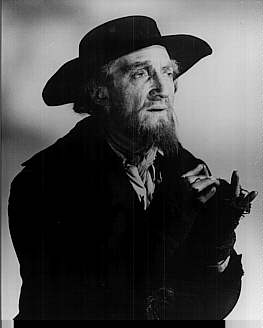
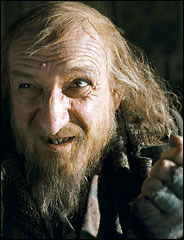
I have only one minor criticism to Plaut’s excellent book is with respect to the English writer, Charles Dickens’ book, A Christmas Carol, which tacitly portrays a negative image of the Jews in the guise of Ebenezer Scrooge. Dickens wrote his anti-Semitic book, Oliver Twist in 1838 and his infamous character—the reprobate Fagin. Jews complained about Dickens’ choice of villain, which he never tired of saying “the Jew” 257 times in his book when mentioning him. Eventually, he tried to placate the Jewish community by not referring to Fagin as “the Jew” in the next 179 references to him.
Clearly Dickens probably was embarrassed at the criticism he received, but he was determined to exact his revenge in a way that nobody would be able to point the finger of blame at him for expressing his disgust toward the Jews. For Dickens, every Jew is a Fagin.
In 1843, Dickens came out with his beloved novel, “A Christmas Carol” and he portrays a man named Ebenezer Scrooge as the miser of his story. Had Dickens never written Oliver Twist, I would not necessarily have associated Scrooge as a Jewish character—a point that Dickens never makes in his story.
The literary Jonathan Grossman makes a penetrating observation about one of Scrooges’ conversation with his nephew, who rudely turns down his request to attend a Christmas dinner:
“But why?” cried Scrooge’s nephew. “Why?”
“Why did you get married?” said Scrooge.
“Because I was in love.”
“Because you fell in love?” growled Scrooge, as if that were the only one thing in the world more ridiculous than a merry Christmas.”
Grossman proposes an interesting subtext and contends that Scrooge is really Jewish. Scrooge is upset his nephew has intermarried-a social taboo long held by Jews of his era. Being invited to his nephew’s Christmas celebration was distasteful on two grounds: Had he not married the non-Jew, he wouldn’t be celebrating Christmas with her in the first place! Scrooge’s disdain for having never celebrated Christmas is precisely because he is Jewish and Jews don’t celebrate Christmas!
Grossman makes a very good point.
In my opinion, the stingy Ebenezer Scrooge psychologically reinforces many of the old anti-Semitic caricatures seen in the Oliver Twist story, namely, the Jew was a stingy miser who loved money more than anything.
- Oh! But he was a tight-fisted hand at the grind-stone, Scrooge! a squeezing, wrenching, grasping, scraping, clutching, covetous, old sinner! Hard and sharp as flint, from which no steel had ever struck out generous fire; secret, and self-contained, and solitary as an oyster. The cold within him froze his old features, nipped his pointed nose, shrivelled his cheek, stiffened his gait; made his eyes red, his thin lips blue; and spoke out shrewdly in his grating voice. A frosty rime was on his head, and on his eyebrows, and his wiry chin. He carried his own low temperature always about with him; he iced his office in the dog-days; and didn’t thaw it one degree at Christmas.
In Dickens’ twisted mind, he felt he had the last laugh at a people he so deeply despised. I think that Jewish families should be sensitive to this problem and discourage their children from watching Dickens’ A Christmas Carol. Scrooge’s ultimate conversion in the end of his book may have reflected Dickens’ deep desire that the Jews embrace Christianity and disappear altogether from history.
In Charles Dickens last novel, Our Mutual Friend, Dickens appears to have experienced some regret for maligning the Jewish community in Oliver Twist through the persona of Fagin (and possibly Scrooge). One character named Mr. Riah (Hebrew for “friend”) is depicted as a Jewish money-lending manager who acts compassionately toward Lizzie Hexam and Jenny Wren, assisting them whenever they had a need. Riah is a very sympathetic personality in this story. Wikepedia notes “Critics believe that Riah was meant as an apology for the stereotypical character of Fagin in Oliver Twist, particularly in response to Mrs. Eliza Davis, an upstanding Jewish woman who wrote to Dickens saying that “the portrayal of Fagin did ‘a great wrong’ to all Jews.” Other critics still take issue with Riah, asserting that he is “too gentle to be a believable human being.” [1]
Did Dickens change for the better toward the end of his life?
This is a question we may never know the answer.


Respond to this post