
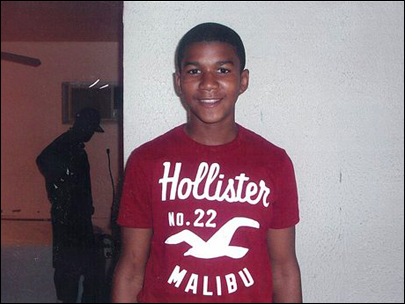
Let me say from the beginning that I do not think George Zimmerman has a lot of common sense. His impulsive behavior bought himself more trouble than he expected. If a man could be judged on the basis of his foolishness, the jury?s verdict would have unanimously declared Zimmerman guilty. However, the purpose of this trial was not to determine his stupidity and foolishness. The purpose of this trial was to decide whether Zimmerman was guilty of manslaughter in the death of young Trayvon Martin, who claimed he shot his victim in ?self-defense.? By the same token, I do not think Trayvon Martin’s behavior was by any means excusable. This young man was looking for a fight and he paid a terrible price for his aggression.
This fascinating trial was viewed by millions on national television, the jury finally acquitted him.
After the trial, I wondered: What would Jewish tradition have to say about this type of trial?
The Torah tells us that if someone is trying to kill someone, the victim or a bystander has the right to prevent the assailant?even if it means taking the assailant?s life.
Another Talmudic discussion on the verse:
- If a thief is found breaking in, and is beaten to death, no bloodguilt is incurred; but if it happens after sunrise, bloodguilt is incurred . . . (Exod. 22:2)
The Babylonian sage named Rava (270-350 CE) discusses this passage and attempts to explain its reasoning:
- If the thief be found breaking in . . . What is the rationale of this [i.e., being permitted to kill a thief who is breaking in]? It is self-evident that no person will simply allow someone else to take his money; and the thief will think to himself: If I go in, he will stand up against me and resist; and if he does, I will kill him. Therefore the Torah says: “If, one comes to kill you, arise and kill him” (Sanhedrin 72a).
According to Rava, whenever a homeowner feels as though his life is in danger, he has the right to assault a burglar who has broken into his home in stealth. Beyond that, one may further infer that this same rule applies to anyone who finds his life in imminent danger?the principle of self-preservation demands that the victim use whatever means within his power to extricate from danger. Parenthetically, I would add that the Torah also teaches us that one should not stand idly by the blood of one’s neighbor as it is being shed (Lev. 19:16). How much more so should one not act passively as one’s own blood is being shed!
Rabbinic interpretation further discusses other nuances implied by this passage.
????????? If a thief be found breaking in ? The Rabbis taught: This tells me only of breaking in. Whence do I derive his roof, his yard, or his enclosure? From: “If the thief be?found”?? anywhere. If so, why is “breaking in” mentioned? This ?teaches us that his breaking in is his warning [i.e., If he breaks in, he need not be warned, but may be killed outright]?(Ibid).?R. Chiyya adds: “If [in the act of] breaking in, he has no blood,” [i.e., he may be killed]; but outside of it [i.e., if he desists and starts to leave], he must not be killed.
In other words, by breaking into someone else?s home, the thief is considered as one who has been formally warned by witnesses that his life may be forfeited. However, if it is clear that the thief does not intend to kill the homeowner and the homeowner has killed the thief–then the homeowner is guilty of manslaughter. On the surface, one might argue that by disregarding the 911 operator, Zimmerman created the circumstances that led to Martin’s death.
Now, how does this Talmudic discussion pertain to the Zimmerman trial?
There is no doubt that Zimmerman acted on his own initiative by following the Trayvon Martin?against the suggested of the 911 operator. One man had a gun, the other one didn’t. He never expected that Trayvon would aggressively attack him, pummeling Zimmerman?s head and face into the pavement. Put in different terms, each person made a unilateral decision to raise the stakes of their interaction. Zimmerman did so by following Martin; Martin did so by attacking Zimmerman instead of running away. This last point is essential: By choosing to the play the role of an aggressor, Martin raised the stakes of their fateful encounter.
Under the circumstances, what should Zimmerman have done? More importantly, what would we have done if this had happened to any one of us? Would we have acted differently if it was our head that was being pummeled to the pavement?
One thing seems certain: ?If he does nothing, he might be killed by Martin. Zimmerman claimed that Martin verbally threatened to kill him as he was being beaten?and after a struggle for the gun, Zimmerman shot Martin and killed him.
If you find this scenario implausible, ask yourself: What would you do under similar circumstances? True, George Zimmerman made a serious error in judgement in following Trayvon Martin, but unfortunately, the young man overreacted and paid the ultimate price for his aggressiveness.
JUL
About the Author:
As Rabbi of Temple Beth Shalom of Chula Vista, California, a Conservative/egalitarian United Synagogue congregation, Rabbi Michael has concentrated on developing the youth and adult religious education, social action initiatives, and Israel programming. TBS draws from the entire San Diego area enjoys getting together as a “family” celebrating not only Shabbat services, religious holidays and life cycle events, but also summer Bar-B-Q’s, and Oneg Shabbat vegetarian potluck dinners. We teach our members how to cook for kosher; it’s really not that hard.