The Dietary Laws and Their Rational (Part 1)

Contrary to popular opinion, the prohibition against the pig as a food animal for Jews is probably rooted in religious prohibitions against animals sacred to other peoples. The modern fear of a trichinosis infection, a parasitic and often lethal disease transmitted to humans by consumption of insufficiently cooked pork, is valid but unlikely to be the original reason for regarding swine as ritually impure (Isa. 65:4; 66:3).

As we noted in another posting, part of the misunderstanding lies in the translation of the Hebrew word “tame” which really means “impure,” but is translated as “unclean” which implies that hygiene is at the heart of the observance. This doesn’t mean that hygiene is not important, for if one observes the kosher laws, it will enhance personal hygiene but this is a residual effect and not the primary motivation behind the kosher laws. In the medieval age during the height of the Black Plague, Jews were frequently attacked because their hygiene was superior, for the Jews always washed their hands. On the other hand, the Hebrew word shketz (which is used to describe non-kosher fish) definitely has a pejorative connotation denoting filth or anything that is disgusting (cf. Nah. 3:6, Eze. 5:11).

Among the various reasons that have been given for these laws. The traditional and most obvious reason is the religious or spiritual, “You shall be men consecrated to me” (Exod. 22:31). A holy people needs to distinguish between the sacred and the profane. The celebrated “Letter of Aristeas,” a Judaic philosophical work that was originally written in Greek (100 B.C.E.), contains some of the oldest explanations found anywhere regarding the dietary laws. In his letter, Aristeas taught that the purpose of the kosher laws served as a hedge differentiating the Jewish people from other nations. He also stated that these laws were given to the Jews to inculcate in them the spirit of justice, to awaken pious reflections, and, by their means, to help form the character of the individual. To prove his contention, he pointed to the fact that in kashrut, birds of prey are forbidden as food so the Jew might recall the first principle of social justice: one must never prey on others. Continue Reading

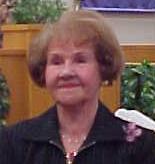
In Memory of Esther Avruch, Holocaust Survivor

  1. Esther Avruch

A Parable of Two Ships

Rabbinic wisdom speaks of a well known parable about two ships were sailing near the shore; one headed toward the open sea, while the other headed toward the harbor. Everyone was cheering the outgoing ship. But very few cheered for the incoming vessel. A sage observed, there is something paradoxical about all this. The outgoing ship should not be cheered, for nobody knows what lies ahead in wait for it. Nobody knows what stormy seas it may encounter; what dangers might lie ahead of the person as she continues her voyage. But everyone ought to be cheering the incoming ship, for it has clearly reached the port safely. The ship concluded its journey in peace. Loved ones were now united; life begins anew once more. . . .

We are here to pay tribute to a most remarkable woman, Esther Avruch, whose voyage through life was full of danger, loss, joy and triumph. survived the horrors of the Holocaust and made a wonderful life.

Esther’s Life

Let me tell you a little bit about Esther’s life. She was born July 15, 1929, in Sochaczew, Poland, the daughter of Avrum-Scholum and Miriam Fleischman. She was the third youngest of ten children, Esther, and one of her sisters were the only family members to survive the Warsaw Ghetto and the Holocaust.

Like many children in Eastern Europe, religious families sent their children to Catholic schools to learn secular studies, while spending the rest of the day learning about Judaism. (My father also attended Catholic school with all of his siblings-despite the fact that they were Hasidic Jews; this was quite common in Eastern Europe because there were no public schools.) Esther learned at the one of the first Beth Ya’akob schools for Jewish girls. Esther could still remember the songs she learned in school. She dressed up like a Jewish princess whenever she attended services, which she always loved doing. Esther also learned to speak several languages that included, Yiddish, Polish, and Hebrew.

Every week, she used to clean her home for the Sabbath; she had a very happy childhood. Esther especially loved dressing up for the Sabbath in her finest clothes.

The Beginning of the War Years

As Hitler approached Poland, anti-Semites used to say, “Just wait till Hitler comes to Poland . . .” The situation grew worst in Sochaczew, and the family decided to leave for Warsaw, where they thought life would be safer.

In one of the buildings they were hiding, a German bomb exploded the building but miraculously nothing happened. This happened on September 3rd of 1939.

One of the worst experiences occurred on Yom Kippur when all the Jews were huddled at the synagogue, when the Nazis started bombing it. Esther’s sister Raisel, was injured in the attack; they ran away to their home where they hid in the cellar.

For now, everything was ok—or so it seemed. There was no water, and little Esther had to shlep miles to bring just a few buckets of water. Warsaw was conquered by the Nazis, and the family had no choice but to go back to their home town. After the Nazis took over, every Jewish home was burned to the ground; the Jews had to wear armbands with the Mogen David insignia on it. As if the Nazis were bad enough, many Poles proved that they could be just as cruel, and would beat the Jews, and seize their food and water.

Miracles

After a while, Esther and her family were reunited with their father and brothers in Warsaw. Despite the theft of their food and water, Esther did her best to survive and survive she did. When typhus broke out, it was the wisdom of their mother, who protected her children. Anyone going to a hospital, simply never returned.

Starving for food and drink, simple Polish peasants, like a miracle from God, shared their food with the family. They were friends of Esther’s father’s business partners. They acted morally and with compassion. As the war continued, the Germans threatened to kill any Pole who would dare save a Jew. The pious Polish Christian family was gunned down, one by one, for daring to save the Jews.

Esther’s mother, Miriam, always shared with what little food with others who were starving as well.

Throughout the ordeal, Esther did her best to maintain contact with her brother Scharma, who was working at a Polish factory in Warsaw. During that time, she managed to smuggle bread to her brother. At one point, she was caught and beaten by the Nazis for helping the Jews.

Another kind Polish family got her a fake birth certificate, and she then assumed the name Marsia Rakowsa. Because the Nazis never suspected that Esther was Jewish because she had blond features. This act of kindness enabled Esther to survive the war. With this birth certificate, she was able to obtain a ration card, which also helped her escaped getting arrested. On more than one occasion, Esther had to face the German officers and tell them she was an orphan, after her parents were killed in a bombing raid. She attended Church services, sung Christian songs and nobody suspected that she was Jewish.

Just prior to the what was to be the famous Warsaw Ghetto Uprising, she found out about the plan of the Jews to fight back, and that she needed to prepare herself a special bunker where she would remain safe. Instead, she decided to take her chances on the Polish side rather than remain in the bunker. Esther said to herself, “If I am to die, I would rather die in the open air, than die in a bunker.”

Esther’s intuition saved her once more, for after the Germans came in and crushed the revolt, there were no more survivors in any of the bunkers. If people were not killed immediately with their families, they were shipped to the Treblinka concentration camp. She recalls that while her brothers Scharma, Yitzchak, and Benjamin were in the trains, they jumped from the train as the Germans began shooting at them, killing Isaac in the process. Scharma was knocked out for a while, only to be robbed and attacked by the Poles in a forest nearby. That was the last time she saw her brother Scharma. Eventually, he was captured and killed by the Nazis. Continue Reading


When a Picture Is Worth More than a 1000 Words


Ramat Shlomo East Jerusalem 770

Ramat Shlomo, East Jerusalem. Lower right corner: replica of 770 Eastern Parkway, the world headquarters of the Chabad-Lubavitch movement. (AP/ Ha’aretz.)

The picture surprised me. At first I thought somebody thus superimposed it into the background, but this was not the case. Aside from looking completely out of place, I am amazed the Israeli government would even allow a building that was not made up of limestone. One must wonder why the Chabad architects would choose a style that sets it apart from all the rest? The answer is only too obvious, Chabad loves being “different.”

For those of you who don’t know, there is another facsimile of the 770 Headquarters in Kfar Chabad. Something tells me they are planning to franchise the model. McDonald’s and Pizza Hut may have some competition in the next decade or so.

I’m a member

And I approve this message.

===========================

Yochanan composed another great melody I think everyone will enjoy.

Apologies to the Animals:

There is a house in Jerusalem
They call the Rising Son [1]
And it’s been the ruin of many a Chasid
Hashem, I know I’m one Continue Reading

Trolls are not welcome here …

The Mythology of Trolls

Trolls are interesting little creatures who were once believed to inhabit caves and hills. In German lands, they were considered to be excellent craftsmen and treasure guardians. In just about all the mythologies regarding them, trolls are especially known for their stupidity. In addition, they are considered evil and dangerous because they have supernatural powers.

In many folktales, trolls make bargains with mortals. Typically, the humans must find a way to outwit the troll, or suffer a miserable fate. I recall as a child reading the famous Rumpelstiltskin story about a miller who lied to a king, claiming that his daughter could spin straw into gold. The girl is soon summoned by the king, shut in a tower with lots of straw and a spinning wheel. The king threatens to execute her if she fails to produce the gold. When she was about to give up all hope, a dwarfish creature (possibly a troll) appears and saves the day—on one condition: she must give the troll her firstborn child. Well, after marrying the king, she gets pregnant and delivers her firstborn child. Suddenly the troll appears to her and demands his payment.

The dwarf refused but finally agreed to give up his claim to the child if the queen could guess his name in three days. At first she failed, but before the final night, her messenger discovered the dwarf’s remote mountain cottage and, unseen, overhears the dwarf hopping about his fire and singing. While there are many variations in this song, the 1886 translation by Lucy Crane reads:

“To-day do I bake, to-morrow I brew,

The day after that the queen’s child comes in;

And oh! I am glad that nobody knew

That the name I am called is Rumpelstiltskin!”

A Rabbi Who Is in Touch with His “Inner Troll”

Well, trolls just made the news the other day, but instead of being of the Scandinavian or German variety, the troll of our story happens to have taken on the human appearance of a Kabbalist and Haredi Jew. If you do not believe that trolls really exist in real time, trust me, they exist in mythical time and this rabbi is definitely in touch with his “inner troll.”

On one lovely wintry day, Troll Inc. decided to crash a party in the peaceful suburban city of Great Neck, New York. The black-hatted rabbi, along with his four hasidim (Moe, Larry, Curly and Shemp), crashes a family gathering that was celebrating their one-year-old child’s birthday.

Banging his siddur on the table, he cries out, “Shema Yisrael!” (“Hear O Israel!”). Imagining that he was like a modern day Pinchas, he excoriates the community for having mixed dancing–number 1 of the Haredi mortal sins–all in honor of a little girl’s first birthday. The troll of our story then curses all the participants with Hebrew curses that they be smitten with “illness, bankruptcy and tragedy for eternity.” According to a petition signed by some of those in attendance, “They started to curse everybody, saying — ‘You’re going to have tragedies, everyone who stays here . . . ’”

The parallels to our original story about a troll named Rumpelstiltskin gets even more interesting.

* Trolls have a talent for upsetting babies

* Trolls love curses and possess supernatural powers

* Trolls are threatening beings

* Trolls are also very stupid and dim-witted.

Rabbi Aderet seems to mastered each of those traits, he is like a Haredi Rumpelstiltskin. Just as in the mythology of trolls, knowing a troll’s name gives a person power over it, the same holds true with our Haredi troll. Identifying this person, for whom he is, will alert others to keep a safe distance from them. This is one rabbi you should not invite to your home for dinner.

A Pinchas Wannabe

As mentioned earlier, trolls are believed to have mystical powers, and this particular rabbi, Rabbi Mordechai Aderet, has a wide following who swear by his mystical abilities to bless people with whatever they want. The local rabbinic councils refuse to chastise the rabbi. Could it be they are afraid of his dreaded powers? Had this event occurred in Mea Sharim, we would probably not be surprised, for Jerusalem is famous for its extremist Haredi behavior–but in suburbia? Really . . . After the party was over, Rabbi Aderet’s followers circulated a rumor that there were wild naked women at the party. The Freudian in me thinks the rabbi and his four guests were hoping for something much more entertaining.

And the hits keep on coming . . . Continue Reading