Dating the Exodus and Its Problems in Biblical Interpretation

People often wonder whether the biblical Exodus actually took place. Unfortunately, there are no extra-biblical testimonies that directly speak of the sojourn of Israel’s ancestors in the land of the Nile. However, Egyptian sources do confirm the general situation that we find in the end of Genesis and the beginning of the Book of Exodus. There are several reports in Egyptian writings about a certain group of nomadic people called Habiru, who came into Egypt from the east while fleeing from famine.

Assuming the Habiru are related to the Hebrews of the Bible, this term referred to a group of “nomadic invaders” who originated from the Fertile Crescent from Northeastern Mesopotamia who made trouble for the Egyptians along their borders. Habiru are described in the Egyptian writings as rebels, outlaws, raiders, mercenaries, servants, slaves, and migrant workers.

Like many peoples of antiquity, there is some extra-biblical evidence that Egypt used slave labor in building projects (Exod. 1:11). At one time the land in Egypt was owned by many landholders; but after the reign of the Hyksos kings the Pharaoh owned most of the land, and the people were serfs of the king (Gen. 47:20). Many Bible scholars accept the essential historicity of the Exodus-with reservations.

The movement of Israel’s ancestors into Egypt and out again is hard to reconstruct. Some groups may have gone there as early as the late eighteenth century B.C.E., at the start of foreign (Hyksos) rule; others may have arrived in the late 14th or early 13th century, only a few years before the oppression reflected in Exodus 1. Similarly, groups of these ancestors may have left Egypt at different times, separated by many years, and under varied circumstances. The latter Israelites preserved stories from the period of their ancestors’ earliest movements into Egypt until the oppression and exodus, but they knew it had been very long-perhaps 430 years, (Exod. 12:40) or 400 years (as indicated in Gen. 15:13). According to Rashi, the great medieval commentator, he wrote that the 430 years actually had to be reckoned from the birth of Isaac! Clearly, the rabbis were justifiably confused by the figures.

Even the Tanakh itself fails to give an incontrovertible date for the Exodus. Indeed, there are too many inconsistencies to ignore. According to 1 Kings 6:1 says, “In the four hundred and eightieth year after the children of Israel were come out of the land of Egypt, in the fourth year of Solomon’s reign over Israel, in the month of Zif, which is the second month, that he began to build the house of the Lord.” But this verse refers primarily to the beginning of the building of Solomon’s Temple and only in a general way to the time of the Exodus. We do not know the precise dates of Solomon’s reign. If we use 961 B.C.E. as the beginning of Solomon’s reign, his fourth year would have been 957 B.C.E. If we take the 480 years of 1 Kings 6:1 literally, then it would appear that Exodus ought to be dated in 1437 B.C.E.

On the other hand, Exodus 1:11 says that the Israelites in Egypt built the store cities of Pithom and Ramses for Pharaoh. Evidently the name Ramses II was not used in Egypt before 1300 B.C.E. If one of the store cities was named for a king by that name, the Exodus could not have happened before 1300 B.C.E. Thus some scholars believe the Exodus must have taken place after 1300 B.C.E. Continue Reading

Seeing Miracles in an Age of Skepticism and Science (03/18/10)

Although I have been critical in the past about several of the late Lubavitcher Rebbe’s policies, he did express at least one memorable thought that has remained with me for many years, “The scientific mind tends to see the natural in the Supernatural, while the religious minded person tends to see the Supernatural within the natural.” In fact, one could say that the Rebbe’s comment might even be used to help explain the theory of evolution-from a theological perspective. However, as we all know, Rabbi Schneersohn was hardly a fan of evolution (a doctrine he definitely did not subscribe to).

It is a pity he did not apply this principle to a theological perspective on evolution as articulated by the 20th century Jewish mystic, Rabbi Abraham Isaac Kook, who was persona non grata in most of the Haredi or Hassidic (especially in Lubavitch) communities precisely because of his receptivity to modern science. Personally, I think Abraham Joshua Heschel expressed the same thought even better, when he exclaimed that the religious consciousness begins with our capacity to wonder, “Wonder rather than doubt is the root of all knowledge.” Science-can certainly inspire this sense of wonderment, whenever we probe the mysteries of life in the universe.

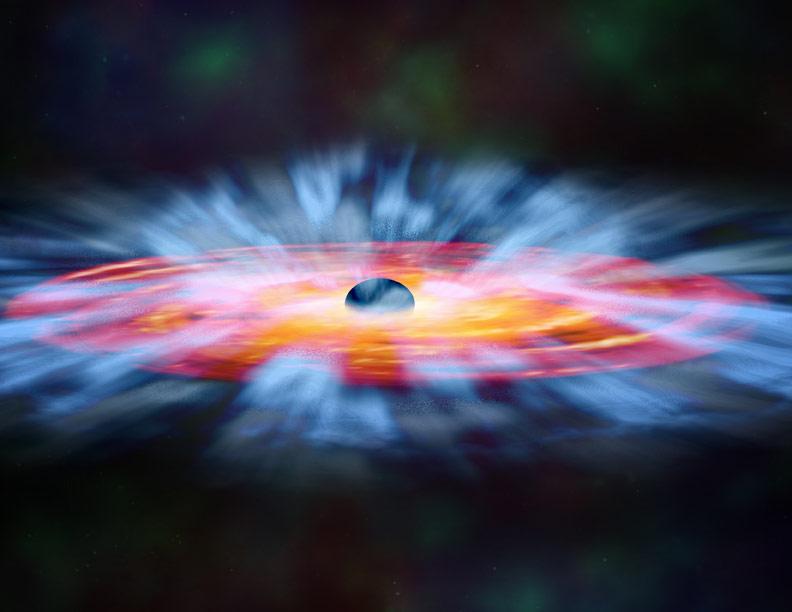
Modern cosmology has developed a remarkable approach to the origin of the universe that has very profound religious implications. This cosmological approach has been called by some as the “Anthropic Principle.” The Anthropic Principle suggests that there may be many regions of a single universe, each with its own structure and laws; only a few might have conditions that exist on this world for the emergence of consciousness and intelligent life. Even more amazing and miraculous is how our conscious sense of personhood could ever have emerged out of the cosmic processes that began eons ago with the Big Bang. As remarkable the appearance of life is even on the most pristine level, it is even more astounding that human consciousness has the ability to contemplate itself in relation to the universe. The Anthropic Principle shows that the organization of matter in the universe is not a slipshod or haphazard affair the universe reflects symmetry and order. British physicist Paul Davies observes that there are seven essential prerequisites that must be satisfied if life is to exist on the earth:

1. There must be an adequate supply of the elements which comprise our bodies, e.g., carbon, oxygen, hydrogen, phosphorus and calcium.

2. There must be little or no risk of contamination by other poisonous chemicals such as would be found in an atmosphere containing methane or ammonia.

3. The climatic temperature must remain within a narrow range of 5 to 40 degrees Celsius, which is a mere 2% of the temperature range from within the solar system as a whole.

4. A stable supply of free energy must exist, which in our case is provided by the Sun.

5. Gravity must be strong enough to keep the atmosphere from escaping into space, but it must be weak enough to allow us to move freely about on the Earth’s surface.

6. A protective screen must exist to filter out the Sun’s harmful ultraviolet rays, which in our case is provided by a layer of ozone in the upper atmosphere.

7. A magnetic field must exist in order to prevent cosmic subatomic particles from raining on the Earth. Were the Earth’s circular orbit (a 3% variance) were like the elliptical orbit of the planet Mars, which varies from 50 million kilometers to 4.5 kilometers, the Earth would incinerate once a year when the Earth is closest to the Sun. [1]

Thus if the force of gravity were pushed upward a bit, stars would burn out faster, leaving little time for life to evolve on the planets circling them. If the relative masses of protons and neutrons were changed by a hair, stars might never be born, since the hydrogen they eat wouldn’t exist. If, at the Big Bang, some basic numbers the “initial conditions” had been shaken, matter and energy would never have formed into galaxies, stars, planets or any other platforms stable enough for life as we know it. And so on. At a 1981 symposium, Sir Fred Hoyle is reported to have said:

“The chance that higher life forms might have emerged in this way (through evolutionary processes) is comparable with the chance that a tornado sweeping through a junkyard might assemble a Boeing 747 from the materials therein.” Hoyle further said that “he was at a loss to understand” the compulsion of evolutionary biologists “to deny what seems to me to be obvious (i.e., that evolution is not tenable)-unless God utilized it as a means of creating the world we now know.”[2] Continue Reading

How to Recognize the Angels Among Us . . .

Students of the Bible often wonder about the mysterious identity of the three “men,” who visited Abraham (Gen 18ff.).

The identity of the angelic beings has stirred many controversies among scholars over for over two millennium. The 12th century rabbinic savant, Abraham Ibn Ezra, explains that these three men were in fact, human beings who were sent by God to bring a message to Sarah, while the other two later went to Sodom.

A similar thought is found in the theological writings of Maimonides and the 14th century Karaite scholar Aharon ben Eliyahu, both who maintain that prophets are occasionally referred to as “angels” as it says “but they kept mocking the messengers of God, despising his words, and scoffing at his prophets, until the wrath of the LORD against his people became so great that there was no remedy” (2 Chron. 36:16). There were other individuals who were blessed with a spiritual sense of God’s Presence besides Abraham (cf. Gen. 25:22-23).

The 14th century rationalist and astronomer Levi ben Gersonides develops this insight a bit further while adding that this interpretation is harmonious with the verse “He looked up and saw three men standing near him.”

As to the obvious question, “Why did the Torah later describe these men as “angels” in the narrative of Lot (19:1)?” Gersonides replies, that a prophet is sometimes referred to as an angel. These prophets didn’t come for the sake of Abraham, who was also a prophet, but their purpose was to inform Sarah about the prospect of her pregnancy. As we have mentioned earlier, Gersonides accepts the view that angels can be human beings empowered by God.

Thus, when the Torah tells us that three “men” visited Abraham, the Torah means exactly what it says —these three “men” were exactly that-men!

As we will soon see, it is not the personality that defines what an angel is, it is the role that the angel plays. When we look at it from this perspective, it is as Gersonides and other have noted, unimportant whether the “men” who visited with Abraham were truly human or supernatural beings merely appearing as “men” since God could have chosen either one for carrying out His purpose.

From a grammatical perspective, the term מַלְאָך (mal˒āk) may mean a message bearer (Gen. 32:2), or personal representatives (2 Sam. 11:4), or political emissaries (Josh. 11:12-14; 2 Sam. 5:11). However, in some of the apocalyptic prophecies, angels appear to truly be supernatural beings on a mission (much like the Blues Brothers) from God (cf. Zech 1:9; 5:5; 2 Sam. 24:17; Gen 19:12-17). As mentioned earlier, with respect to angels, the message is far more important than the individual messenger. Continue Reading