24 Mar
Biblical and Scientific Wisdom on “Gut Reactions”
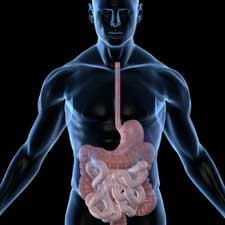
The ancient biblical writers believed that the kidneys were the seat of desire and emotions. For this reason, the kidneys are frequently mentioned in conjunction with the heart (Psa. 7:9; 26:2; 139:13; Jer. 11:20; 17:10). The kidneys were also regarded as the center of the rational and moral faculties (Psa. 16:7; Jer. 12:2).
The reason the kidneys are associated with the person’s innermost being is probably because when an animal is dismembered, the kidneys are the last organ to be reached. Hence, kidneys are a symbol of the innermost being and self-consciousness. Parallels to the biblical references may be found in the Ras Shamra texts, “his kidneys instruct him,” which incidentally has a parallel in the Talmudic concept that “one kidney prompts a man to do good and the other prompts him to do evil.” [1]
Did the rabbis really believe the kidneys “instruct,” a person in a literal or metaphorical sense? This question is unclear. Based on their lack of scientific knowledge, the rabbis probably thought that the kidneys functioned like the brain—at least to some degree. On the other hand, a case could be made that they were speaking merely metaphorically. Most people have what is commonly called, “a gut feeling,” or a “gut reaction,” whenever one is confronted by a situation requiring a quick judgment and decision.
While we typically associate these traits with the brain, it is important to bear in mind that Biblical Hebrew is a visceral kind of language; abstract words like “theology,” or. “theory,” “philosophy,” or even “religion” do not exist, unlike Koine Greek. Rather, there is a concreteness that characterizes the language. A living faith impacts the total person.
In terms of a biblical psychology, the human mind is more often associated with the heart, while judgment is associated also with the kidneys; emotions are associated with one’s bowels (cf. Isa. 63:15). Physical strength is associated with the term “horn,” while the “bones,” represent the self. In fact, the medieval Hebrew term atzmut means essence, for once the body is removed of all its guts, all that remains are the bones (atsamut)-the essence of the once viable person. These expressions are visceral and primal because the human being acts not just on the cerebral level, but also with one’s entire body.
Modern science seems to suggest that a person’s gut feelings are actually connected to the brain via a complex network of neurons derived from the lining of the guts. In fact, scientists refer to this network as a “second brain.” These neural tissues are filled with important neurotransmitters that perform more than just biological functions such as digestion or produce anxiety. A deeper understanding of this mass of neural tissue, filled with important neurotransmitters, is revealing that it does much more than merely handle digestion or inflict the occasional nervous pang. The little brain in our innards, in connection with the big one in our skulls, partly determines our mental state and plays key roles in certain diseases throughout the body, influencing a person’s moods and stress level. Continue Reading